A home construction contractor turns blueprints, permits, and a dirt lot into a finished house by managing every subcontractor, inspection, and delivery along the way. Hire the wrong one and a single missed inspection can stall your build for weeks. This guide covers what these professionals actually do, what they charge in 2026, and the exact steps to vet one before you sign anything.
What Does a Home Construction Contractor Do?
A home construction contractor manages the construction of a house from start to finish: estimating costs, hiring and supervising subcontractors, and overseeing every phase of the build. Think of this person as the project's central coordinator, not just another tradesperson on-site.
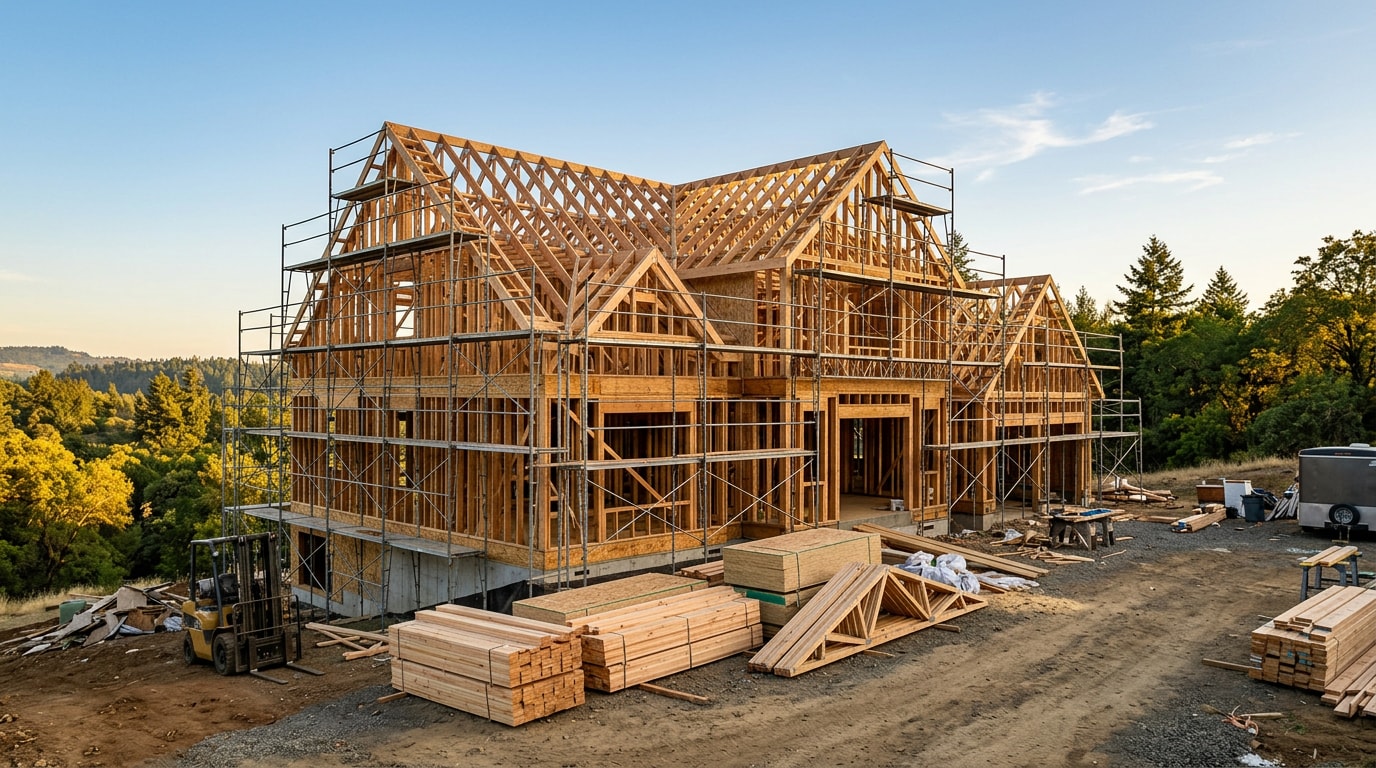
That coordination role matters more than most homeowners realize. It takes an average of 22 subcontractors to build a home from scratch, according to a report from the National Association of Home Builders, and with so many specialists coming and going, having a general contractor is vital. Without one person managing schedules, deliveries, and inspections, a project can fall apart fast.
On our own builds across Northeast Tennessee, the projects that stay on schedule are almost always the ones where a single contractor owns the calendar from permitting through the final walkthrough. The moment that ownership gets split between the homeowner and multiple trades, delays compound quickly.
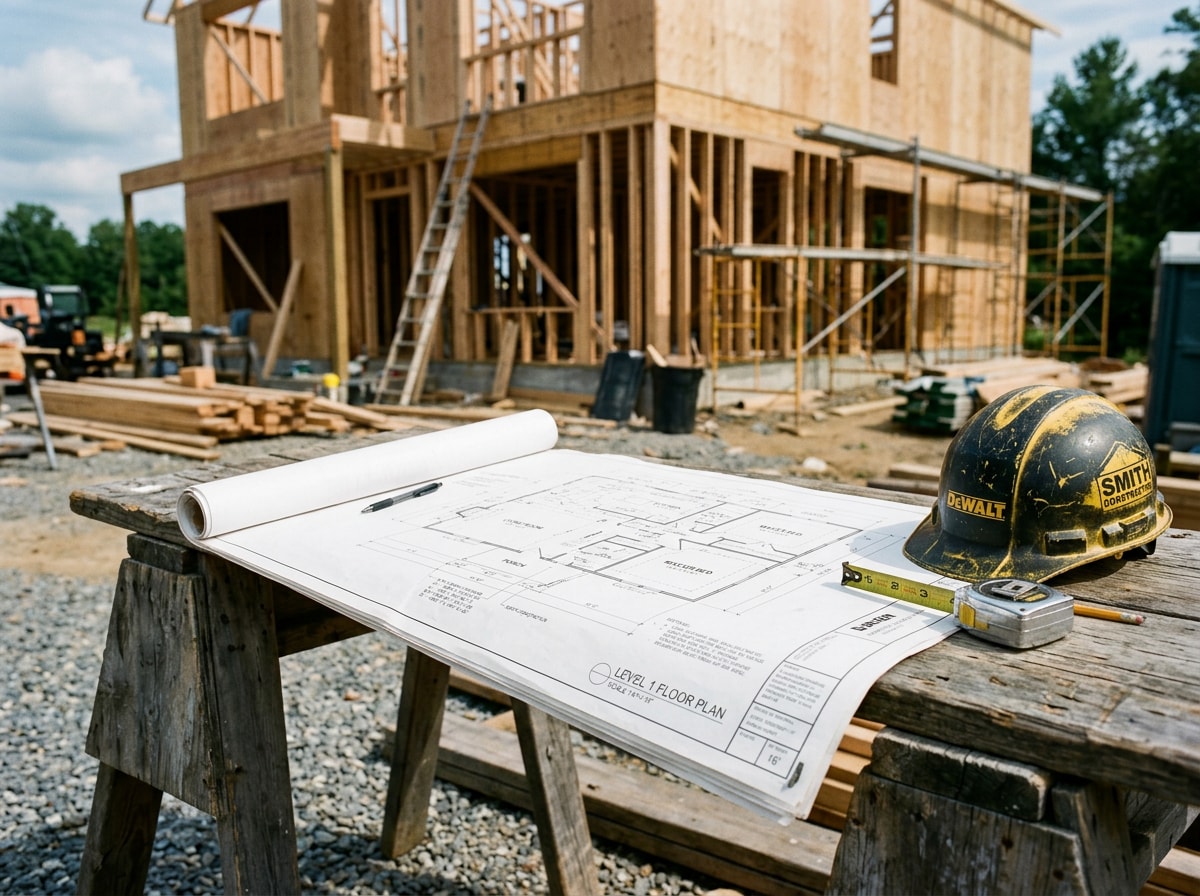
If you want to see how this works on a real project, visit our general contractor services page to learn how our team structures a build from permitting through final walkthrough, or browse completed projects for examples.
General Contractor vs. Home Builder vs. Owner-Builder
These terms get used interchangeably, but they describe different working relationships. A general contractor manages the entire process of building your new home , often for a design already drawn up by an architect. A production home builder typically works from predefined plans, while a custom home builder tailors both design and construction to a specific lot and client vision.
There's also a third path: the owner-builder, where the homeowner acts as their own contractor. Any individual or group of individuals who own the property on which they plan to construct, alter, repair, improve, or remodel a building or structure is considered an owner-builder , and this route shifts every risk and every phone call onto you. It can save money on paper, but it requires real construction knowledge and time most homeowners don't have to spare.
Understanding the general contractor vs. home builder distinction early helps you set realistic expectations before you request bids. If you're planning a ground-up build, our new home construction and custom home design services walk through how that process actually works.
How Much Does a Home Construction Contractor Cost in 2026?
Home construction contractor fees typically run $18,000 to $83,000 to build a house, or roughly 10% to 20% of the total construction budget. That fee covers overhead, profit, and a markup on materials and labor, not just the contractor's personal time.
For a sense of scale, for custom, or contractor-built, homes, the median price was $166 per square foot of floor space in 2024, up slightly from $162 in 2023 , according to NAHB's latest analysis. That per-square-foot figure already bakes in typical contractor markup, which is why it's a useful sanity check against any bid you receive.
| Fee Structure | Typical Range | Full Home Build (~$400,000 project) | Smaller Remodel (~$50,000 project) |
|---|---|---|---|
| Percentage fee | 10%–20% of total cost | $40,000–$80,000 | $5,000–$10,000 |
| Flat fee | Fixed project price | $35,000–$70,000 | $4,500–$9,000 |
| Cost-plus | Actual cost + 10%–20% markup | Varies with actual costs | Varies with actual costs |
| Hourly/daily rate | $50–$150/hr or $300–$500/day | Rarely used for full builds | $1,500–$4,000 for short jobs |
Every structure has trade-offs, so ask your contractor which model they use and why before comparing bids apples-to-apples.
Percentage Fee
General contractors typically charge 10% to 20% as a markup on subcontractor labor, materials, and total project cost. This is the most common structure for full home builds because it scales with project complexity. A larger, more customized build naturally pushes the percentage toward the higher end of that range, while smaller, simpler projects tend to land closer to 10%.
Hourly and Daily Rates
General contractors charge $50 to $150 per hour, though they rarely bill hourly except for pre-construction planning or very small projects. For day-rate work, contractors typically charge $300 to $500 per day for themselves and $150 to $250 per day for subcontractors or laborers. These rates show up more often on remodels or punch-list work than on ground-up home construction, where a percentage or flat fee is standard.
Factors That Affect General Contractor Rates
Project size, project type, location, and the contractor's experience level all shift the final markup range up or down. A complex custom build in a high-cost metro area will command different rates than a straightforward remodel in a smaller market. For a deeper breakdown of how bids get assembled, our guide to estimating for residential construction covers the line items most homeowners never see on a summary sheet.
Want a written, itemized number instead of a rule-of-thumb percentage? Get a Free Estimate from our team before you compare bids.
How to Vet and Hire a Home Construction Contractor
Use a simple, repeatable process instead of relying on gut feeling. Our team at Nordstar Builders follows this same checklist internally before we ever start a job.
1. Get Recommendations From Reliable Sources
Talking to friends and family gives realistic insight into a contractor's work quality, reliability, and professionalism that online reviews sometimes miss. Neighbors who've recently completed a similar project are especially useful, since they can speak to timeline accuracy and how well the contractor communicated through delays.
2. Verify Licensing and Insurance
Confirm that a contractor meets the licensing requirements for your state and local jurisdiction, and verify current documentation through official channels rather than taking their word for it. Requirements vary significantly across the country, and a license that's expired or restricted to certain trade categories won't cover your project. For a state-by-state reference on how licensing verification works, the National Association of State Contractors Licensing Agencies publishes guidance contractors and consumers both rely on.
Insurance matters just as much. Confirm the contractor carries liability insurance and workers' compensation, and request certificates of insurance so you can verify coverage directly with the provider.
3. Score Qualifications Instead of Guessing
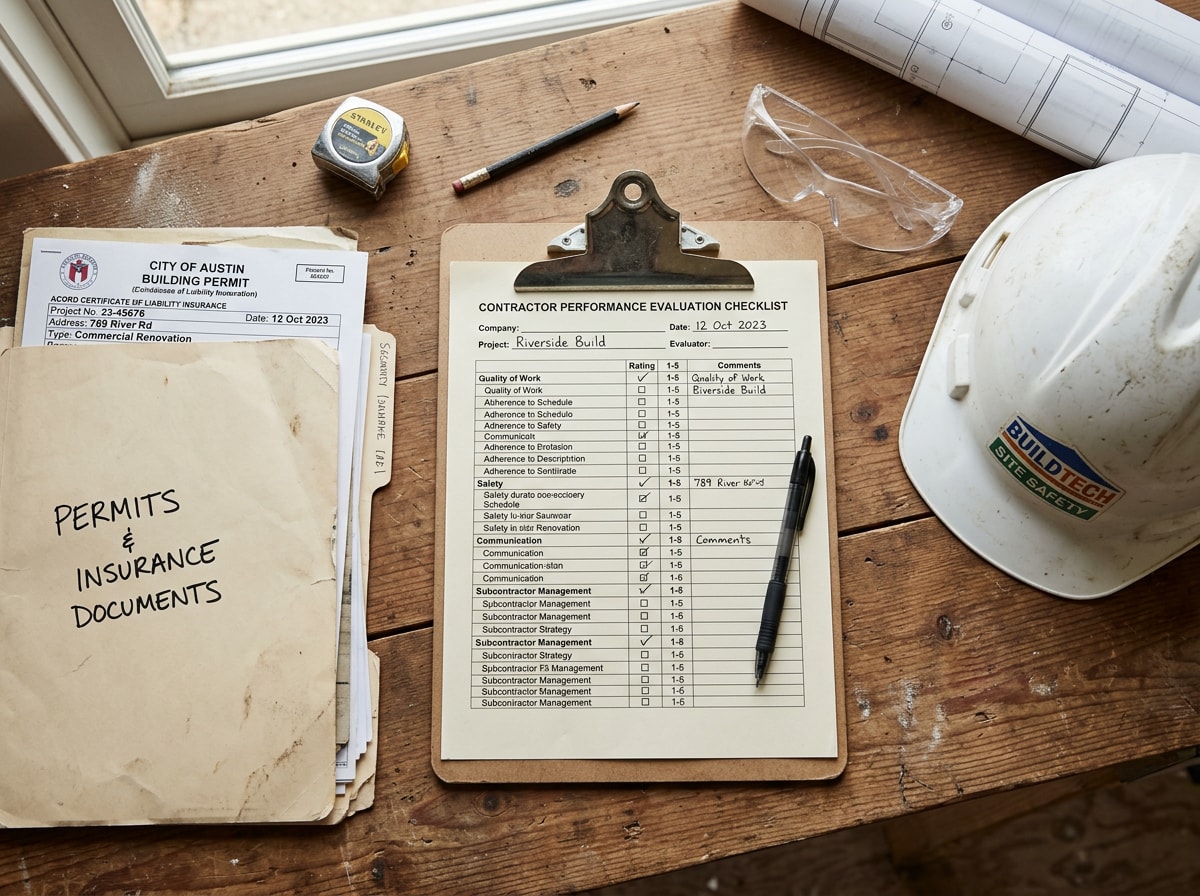
| Criteria | 1 (Poor) | 3 (Average) | 5 (Excellent) |
|---|---|---|---|
| Licensing & documentation | None provided | License only | License, insurance, and bonding verified |
| References | Unavailable | One or two vague contacts | Multiple recent, verifiable references |
| Contract clarity | Verbal agreement only | Basic written scope | Detailed scope, timeline, payment schedule |
| Communication | Slow or evasive | Responds within a few days | Prompt and transparent |
| Financial health | Requests large upfront payment | Standard deposit | Milestone-based draw schedule |
Score each candidate across these categories and you'll have an objective comparison instead of a hunch.
4. Check References and Visit an Active Job Site
A contractor's finished projects tell you a lot, but an active job site can tell you even more. You don't need construction expertise to notice the difference between a controlled, organized site and a chaotic one, from how materials are stored to how workers interact.
Don't rely on references alone, since contractors will only hand you their most satisfied customers. Visiting a current work site is just as important as calling past clients because it shows you real conditions in real time.
5. Watch for Red Flags
Walk away, or at least slow down, if you notice:
- A bid dramatically lower than every other proposal
- A vague scope of work or promises made only verbally
- No proof of licensing or insurance on request
- Unclear payment terms or a demand for full payment up front
- No defined plan for handling change orders
- Unreachable references or an unrealistic completion schedule
Scammers say they have materials left over from a previous job, pressure you for an immediate decision, and ask you to pay for everything up front or only accept cash. One red flag alone may not disqualify a contractor, but multiple warning signs together deserve serious attention. The FTC's guide to avoiding home improvement scams lists the most common patterns in detail. Keep a written log of every conversation with your contractor; it becomes your reference point if a dispute ever comes up.
If you're building or remodeling in Northeast Tennessee, permitting timelines and inspection schedules vary by county. Ask any contractor bidding on your project for a written schedule tied to your specific jurisdiction, not a generic timeline copied from somewhere else. We work throughout Johnson City, Kingsport, Bristol, Elizabethton, Carter County, Jonesborough, and Fall Branch, TN, and local jurisdiction quirks are exactly the kind of detail a contractor unfamiliar with your area will miss.
Ready to compare a real bid against everything above? Get a Free Estimate and use this checklist to score it.
FAQ
What does a general contractor do?
A general contractor manages the construction of a home from start to finish, including estimating costs, hiring subcontractors, and overseeing daily progress. They act as the single point of accountability across the entire project.
What's the difference between a general contractor and a home builder?
A general contractor typically manages construction of a home designed by an outside architect, while a home builder often works from predefined or semi-custom plans. Custom home builders sit somewhere in between, tailoring both design and construction together.
How much does a general contractor cost?
Most general contractors charge 10% to 20% of the total construction budget as their markup on labor and materials. On a full build, that typically works out to $18,000 to $83,000 depending on project size and location.
Do I need a general contractor to build a house?
No state requires you to hire one, but most owner-builders underestimate the time and coordination it takes. A licensed general contractor can be hired to perform and/or subcontract the completion of all work on the project , which is why most homeowners choose that route instead of self-managing.
How do I verify a contractor's license and insurance?
Ask for the license number and check it against your state's licensing board database directly, not just a copy the contractor hands you. Then request a certificate of insurance and call the insurance provider to confirm it's active.
What questions should I ask before hiring a contractor?
Ask to see current license and insurance documentation, request references from projects completed in the last year, and ask how they handle change orders and payment schedules. Their answers often reveal more than the bid itself.
Reviewed by the Nordstar Builders team, licensed general contractors serving Johnson City, Kingsport, Bristol, and the surrounding Northeast Tennessee region. Questions about your project? Contact us directly.