Hiring a home addition builder in Elizabethton, TN means answering two questions before you sign anything: what will this cost, and what will the process look like on the ground here. Addition pricing follows the same core drivers you'd see anywhere in Tennessee, but Carter County's permitting rules, hillier lots, and local labor market shape the final number in ways a national cost calculator won't catch. This guide breaks down 2026 costs by project type and size, the local permit process, and the planning steps that keep a project on schedule.
Choosing a Home Addition Builder in Elizabethton, TN
Not every contractor who builds additions elsewhere in Tennessee understands Carter County's specific requirements. At Nordstar Builders, we pull permits with the City of Elizabethton and Carter County building department regularly, and we've found that floodplain surveys and power-board coordination near the Watauga River corridor routinely add two to three weeks to a standard timeline if they aren't planned for up front.
Before you hire anyone, check for:
- TN licensing and insurance verified directly, not just claimed on a website
- Local permit experience specific to Carter County and the City of Elizabethton, not just "Tennessee" broadly
- A written contract with a payment schedule tied to completed phases, not lump-sum deposits
- A portfolio of similar work — ask to see additions of comparable size and scope
- Clear communication about who handles permit filing, inspections, and change orders
We build additions throughout Elizabethton and Carter County, and you can review recent work on our projects page before reaching out.
What Drives Home Addition Cost in Elizabethton, TN
Five factors show up on nearly every addition estimate in Tennessee: materials, design complexity, labor rates, the size of the addition, and permits. Foundation type and site conditions, slope, soil, and equipment access, add or subtract cost on top of those baseline drivers, and they matter more in Carter County's hillier terrain than in flatter Middle Tennessee markets.
Materials and labor make up the majority of what you pay a builder on any construction project. Nationally, construction costs reached 64.4% of the average new-home sales price in 2024, up from 60.8% two years earlier , and that share is the highest the NAHB survey has recorded since it began tracking the data in 1998 . That's a new-construction benchmark, not an addition-specific one, but it's directionally useful: labor and material inflation are the same forces pushing addition bids up right now.
A reputable Elizabethton home addition builder should walk you through each of these cost drivers line by line rather than quoting a flat per-square-foot number with no explanation. Our room additions page breaks down the project types we build most often in the area.
Home Addition Cost by Type & Size in Elizabethton, TN
What you're adding, a bedroom, a primary suite, a second story, or a sunroom, moves the price far more than almost any other variable. Square footage matters too, but type sets the baseline. Here's how each option typically prices out in 2026.
Room Addition Costs
A standard room addition, a new bedroom, home office, or flex space, usually costs between $35,000 and $80,000, with the final number depending on size and finish level. In the Elizabethton market, homeowners typically land toward the lower-middle of that range, since labor rates here run a bit under Nashville-area pricing.
A basic bedroom addition with simple finishes sits near the bottom of that range. A home office addition with built-ins, upgraded flooring, or custom lighting pushes toward the top. Either way, this category remains one of the more accessible ways to add usable square footage without a full structural overhaul.
Primary Suite Addition Costs
A primary suite addition typically runs $75,000 to $150,000 or more, depending on square footage and finish selections like a walk-in closet, soaking tub, or custom tile work. It's one of the priciest single-room projects, but also one of the most requested.
Return on investment for major additions varies by project type and local resale conditions, so treat any single ROI number with caution. The one addition category with solid, published data is bathroom additions: nationally, a midrange bathroom addition carries a job cost of $60,645 against a resale value of $32,347, recouping 53% of cost , according to the 2025 Cost vs. Value Report. Primary suite and room additions tend to track in a similar broad range, but they're measured less consistently across markets.
Second-Story Addition Costs
A second-story addition requires structural engineering, temporary roof removal, and entirely new plumbing and HVAC runs, which is why it costs more than almost any other addition type. You're not just adding space, you're reinforcing everything underneath it first.
The build-up vs. build-out decision matters here. Building up (adding a second floor) generally costs more per square foot than building out (a ground-level addition) because of structural and engineering requirements, but it preserves yard space, which matters on Carter County's smaller or sloped lots. A rough planning comparison:
| Approach | Typical Cost per Sq. Ft. | Key Cost Drivers |
|---|---|---|
| Build-out (ground level) | $150-$250 | Foundation, slab, exterior walls |
| Build-up (second story) | $200-$350 | Engineering, roof removal, temp bracing |
A second-story addition generally takes longer and costs more upfront than a ground-level build, but it's often the only option on a tight lot.
Sunroom & Family Room Addition Costs
Sunroom pricing varies more than almost any other addition category. A basic three-season porch can start around $13,000, while a fully insulated, climate-controlled four-season room can run as high as $97,000 depending on size, glazing, and HVAC integration.
A family room addition sits somewhere in between, depending on whether you're matching existing finishes or going simpler. If budget is the priority, a three-season sunroom remains one of the most affordable ways to add livable square footage in the Elizabethton market.
Home Addition Cost by Size (Square Footage)
Home additions typically range $100 to $200 per square foot in this market, meaning a 200-square-foot addition could run roughly $20,000 to $40,000 before finish upgrades. Larger footprints generally lower the per-square-foot rate slightly, since fixed costs like permits and site setup spread across more space.
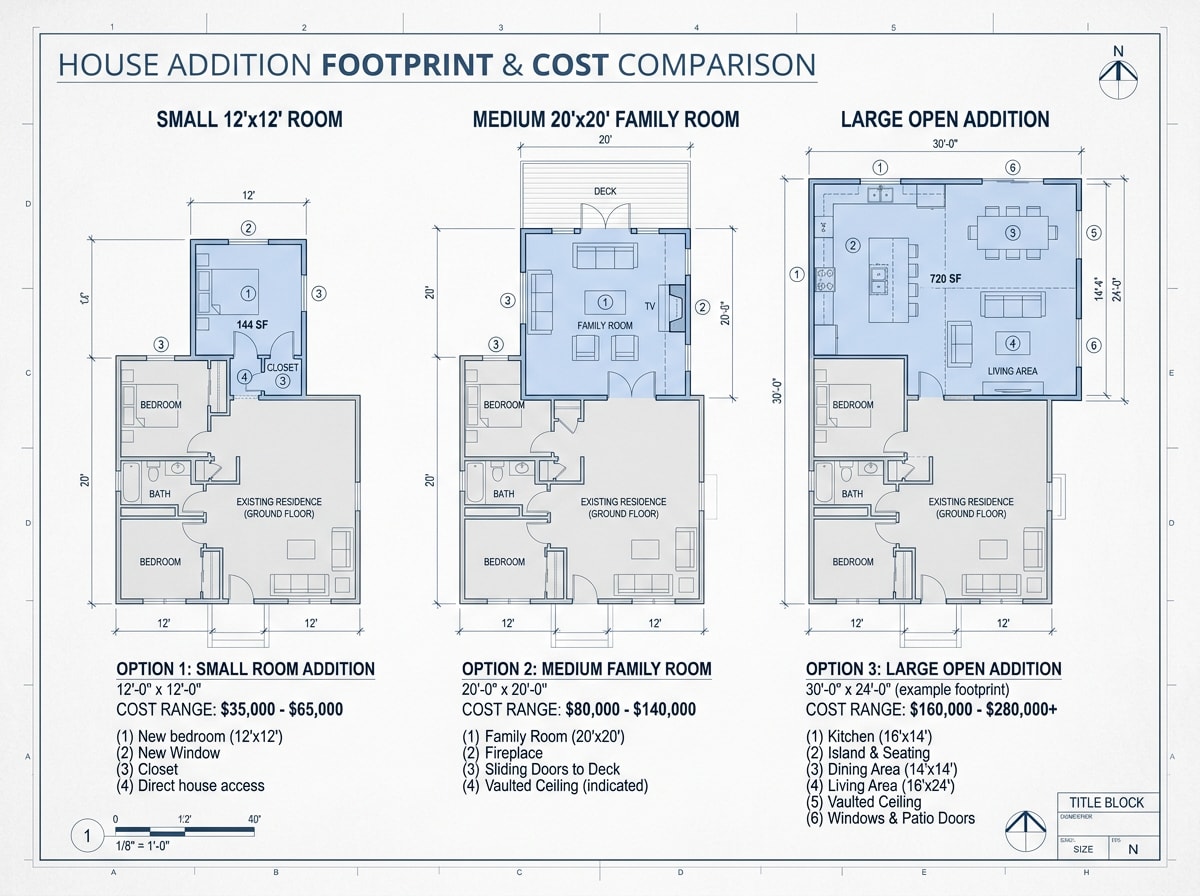
A 12x12 addition (144 square feet) often lands near $14,400 to $28,800, while a 20x20 addition (400 square feet) can run $40,000 to $80,000, depending on foundation type and finish level. These figures are a planning baseline; actual bids vary with site access and structural complexity.
Want numbers specific to your lot instead of a range? Get a free estimate and we'll walk the site with you before you commit to a design.
Permit Costs and Timeline in Carter County & Elizabethton, TN
Permit fees for home additions typically run $800 to $2,500 depending on the value of the work, with approval taking two to four weeks for standard projects. That range comes largely from regional data, so treat it as a starting point rather than a guarantee for your specific project.
Carter County and City of Elizabethton requirements can differ from county to county, and fee schedules get updated periodically. The Division of Fire Prevention is responsible for adopting building and fire codes for structures, though each local government may adopt codes for its own jurisdiction . Before budgeting a firm number, confirm current fees and any Watauga River floodplain or setback considerations directly with your local building department, or review the state framework through the Tennessee Department of Commerce and Insurance.
A home addition permit in Tennessee generally covers the structural work itself, with separate electrical, plumbing, or mechanical permits sometimes required depending on project scope. A local builder familiar with Carter County's process can usually tell you which permits apply before you finalize design. For a deeper look at vetting that experience, see our guide on home addition construction companies.
How to Plan a Home Addition: Step-by-Step
Planning starts with defining goals and functional needs, whether you're adding space for a growing family, a dedicated home office, an in-law suite, or simply trying to increase resale value. That goal shapes everything that follows, from layout to finish selections.
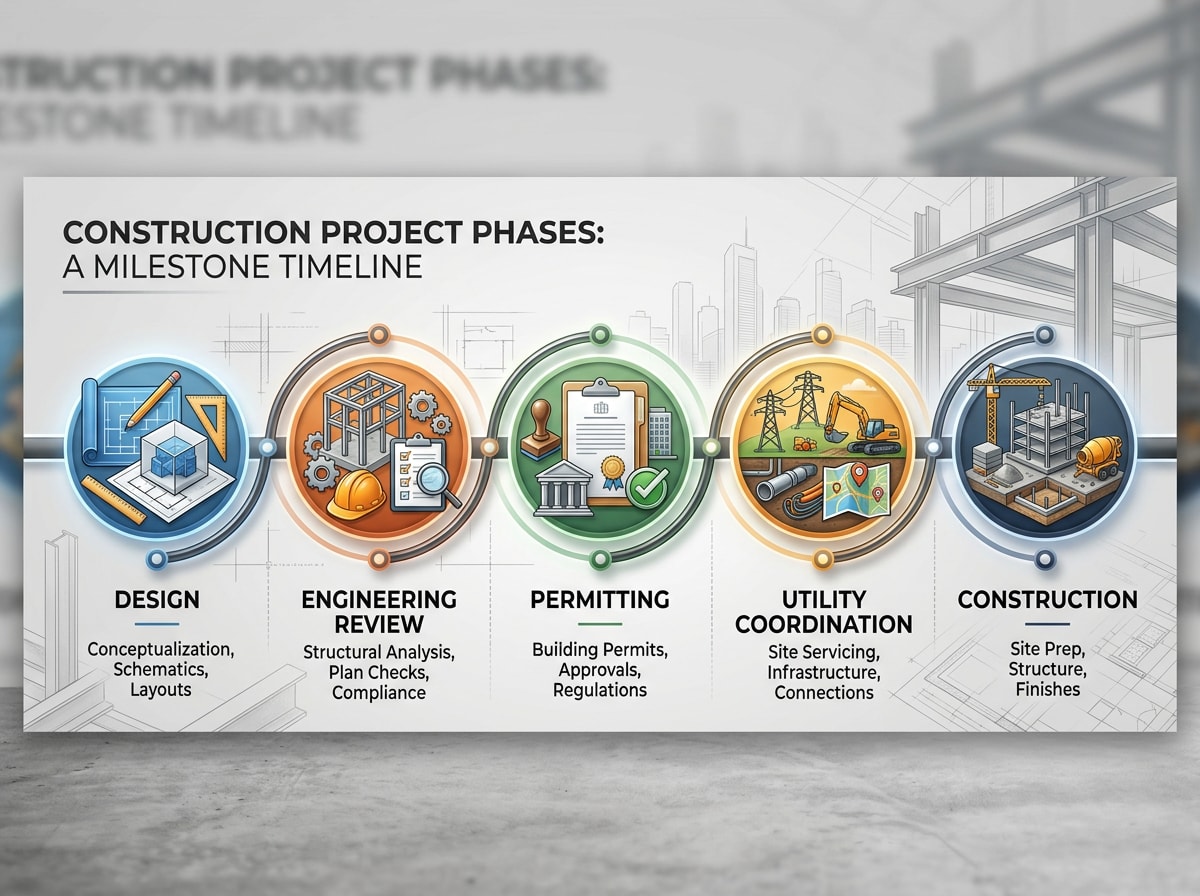
From there, the process typically moves through these phases:
- Design the layout and finish package around your goals and budget
- Engineering review, if the project involves structural changes
- Permitting with the City of Elizabethton or Carter County, including any floodplain or setback checks
- Power board coordination, if the addition requires a service upgrade
- Construction, moving from foundation to framing to finishes
Your contractor typically handles permit applications with the local municipality once design is finalized. A standard room addition usually takes eight to sixteen weeks to build, while a second-story addition can take six months to a year given the added structural and mechanical work involved. Our home building consultation service walks through each of these phases before you sign a contract.
If a kitchen or bathroom update is part of your addition plans, our post on the benefits of kitchen remodeling is worth a read before you finalize scope.
Ready to put real numbers behind your plans? Contact Nordstar Builders for a free estimate built around your lot, not a national average.
FAQ
Do I need a permit for a home addition in Tennessee?
Almost certainly, yes. All structural home additions require building permits in Tennessee, and electrical, plumbing, or mechanical permits may apply depending on scope. Discuss the permit process directly with any contractor you're considering before signing a contract.
How long does a home addition take in Tennessee?
Most home additions take three to six months from permit approval to completion. Design and permitting usually add another six to twelve weeks before construction even begins, and complex two-story projects can run considerably longer.
What is the cheapest type of home addition?
A basic three-season sunroom or small bump-out addition is typically the most budget-friendly option, often starting around $13,000. For a full comparison of pricing by project type, see our room additions page.
Is a home addition worth it?
It depends on the project type and how long you plan to stay. A midrange bathroom addition nationally recoups about 53% of its cost at resale , according to the 2025 Cost vs. Value Report, while exterior projects tend to return more and large interior remodels tend to return less. If you're staying put for years, livability usually matters more than resale math.
Does a home addition raise my property taxes in Tennessee?
Usually, yes, eventually. County assessors typically reassess a property after a permitted addition is finaled, which can increase your tax bill in the next assessment cycle. The exact impact depends on Carter County's assessment schedule, so ask your builder or the county assessor's office for specifics before you build.