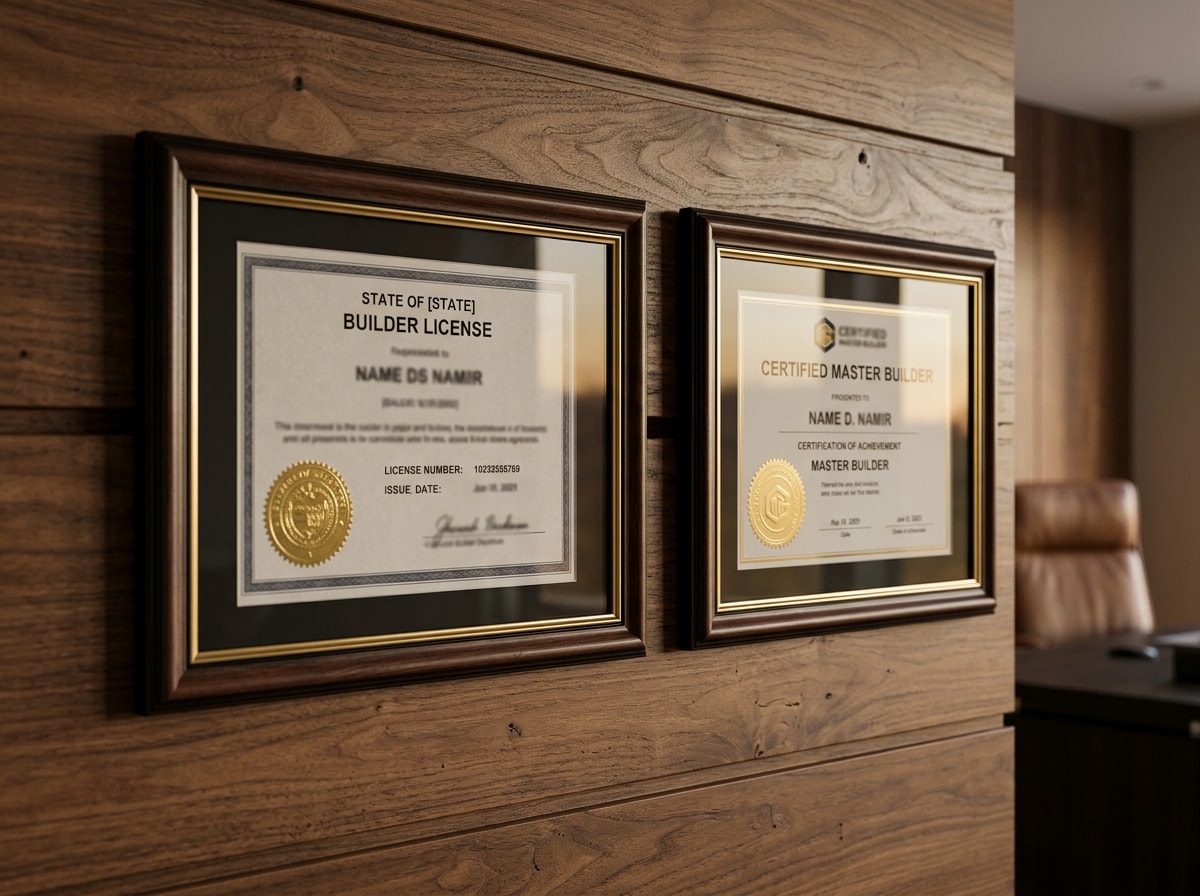
Certified builders hold a designation on top of their state license, awarded by a trade association after they meet extra training, experience, or conduct standards. The catch is that "certified" isn't one fixed thing. It depends entirely on which group issued it and what that group actually checked before handing it out.
That gap between the marketing term and the paperwork behind it is where most homeowners get confused. Here's how to tell the difference before you sign a contract.
What "Certified Builder" Actually Means
Certification is voluntary. No government agency requires it, and a builder can run a fully legal, licensed business without ever earning one.
Trade associations created these credentials to separate builders who invest in extra training from those who just do the state minimum. Some states use "certified" to mean "licensed," but if you're hiring a contractor, they must be licensed and registered, not necessarily certified. That's a distinction worth remembering, because a business card that says "certified" doesn't automatically mean anything about that state's licensing law.
The National Association of Home Builders (NAHB) runs the largest network of these credentials in the country, and several regional and state builders' associations run their own versions on top of it.
At Nordstar Builders, our crews across Johnson City, Kingsport, and Bristol hold several of these designations alongside our Tennessee contractor license, so we get asked about the difference on nearly every consultation call.
Certified vs. Licensed vs. Registered
These three words get used interchangeably in ads, but they're not the same thing legally.
| Term | What it verifies | Who issues it | Legally required? |
|---|---|---|---|
| Licensed | Passed a state exam, met bonding/insurance rules | State licensing board | Yes, for most jobs over a state's dollar threshold |
| Registered | Business is on file with the state or county | State/county government | Varies by jurisdiction |
| Certified | Met a trade association's training, experience, or conduct standard | NAHB, state/local builders' associations | No, always voluntary |
A general contractor may also certify with various trade or government organizations, and the National Association of Home Builders offers more than a dozen different specialty certifications. Each one has its own bar to clear, which is why it's worth knowing what you're actually looking at.
The Main Builder Certifications You'll See
Most certifications you'll run into in the U.S. residential market fall into one of these categories:
- Certified Graduate Builder (CGB):
CGBs must have at least two years of home building experience and must successfully complete a series of classes specific to the needs of the industry, including business and project management, building technology and safety.
- Certified Graduate Remodeler (CGR):
To become a CGR, a remodeler must have at least five years of experience in the industry, take a qualifying exam and successfully complete a pre-set curriculum of courses specific to the remodeling industry, including project and business management.
- Graduate Master Builder (GMB):
The ultimate symbol of the building professional, the GMB designation is for seasoned builders with at least 10 years of experience.
- Certified Aging-in-Place Specialist (CAPS):
The CAPS credential program teaches the technical, business management, and customer service skills essential to competing in the fastest growing segment of the residential remodeling industry: home modifications for the aging-in-place.
- Certified Green Professional (CGP):
The CGP designation is offered by the NAHB, and recognizes builders, remodelers and other industry professionals who incorporate green and sustainable building principles into homes.
- Certified Master Building Professional (CMBP):
This credential is designed to set the most accomplished builders apart from the rest, and it's open to builders with 5+ years' leadership experience.
Local and regional associations run their own parallel programs. In Washington state, for example, a Certified Builder is proven, accountable, and vetted by one of the largest home building associations in the country. In Middle Tennessee, the local HBA ties its certification to homeowner protection: Certified Builder homes carry at least a one-year limited warranty, and the association's Certified Builder committee reviews and makes recommendations on all complaints filed against a member.
That committee-backed complaint process is the practical reason certification matters more than it sounds like it should. It gives you somewhere to go if a dispute stalls.
Tennessee Contractor Licensing Comes First
Before certification even enters the picture, your builder needs a valid state license. The Board for Licensing Contractors was established in 1931 to regulate contractors in the State of Tennessee.
A contractor's license is required before contracting, including bidding, offering to engage, or negotiating a price, for projects of $25,000 or more when acting as a prime contractor, certain subcontractor, or construction manager/consultant. To get that license, contractors, or a qualifying individual for the business, must pass a trade exam and a state business and law exam.
Tennessee also splits contractors into different classifications by trade and project size. If you're vetting a builder for a custom home, remodel, or room addition, ask which classification they hold and confirm it covers the scope of your project.
How to Verify a Certified Builder's Credentials
Don't take a certification claim at face value. Verify it in four steps:
- Check the state license first. Confirm the license number directly through Tennessee's licensing board, not a business's own website.
- Confirm certification with the issuing body. NAHB and most regional associations maintain searchable member directories.
- Request references and recent project photos. Ask for at least two projects similar in scope to yours.
- Confirm insurance and bonding. Get current certificates of general liability and workers' comp before signing anything.
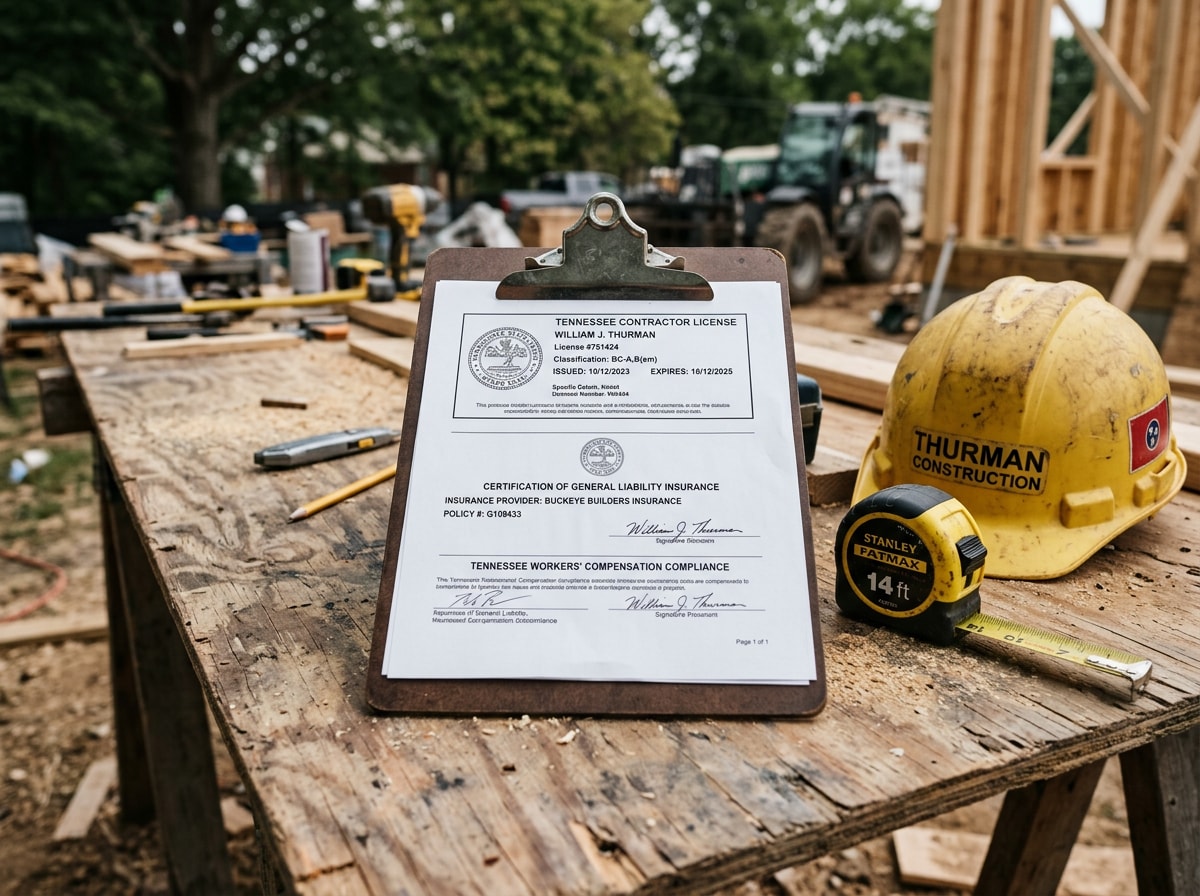
If a builder can't produce clean answers to all four, treat that as your answer.
Why This Matters When You're Hiring
Certification isn't a guarantee of a perfect build, but it's a signal the builder has invested past the state minimum and answers to a review body if something goes wrong. Combined with a verified license and real references, it's one of the fastest ways to shortlist a builder you can trust with a custom home build or a major home renovation.
Our team at Nordstar Builders works across Johnson City, Kingsport, and Bristol, TN, and we're happy to walk you through our own license and certification standing before you commit to anything. If you're comparing bids, our residential construction) and home building consultation pages outline how we scope a project before ground breaks.
Still narrowing your shortlist? Our guide on vetting and hiring residential addition contractors walks through the same reference-checking process in more depth.
Ready to talk specifics? Get a Free Estimate and we'll go over exactly which licenses and certifications apply to your project.
FAQ
What does it mean when a builder is certified?
It means a trade association reviewed the builder's experience, training, or work history and approved them for a designation beyond their state license. It's voluntary, and requirements vary by issuing group.
Is a certified builder the same as a licensed contractor?
No. Licensing is a legal requirement set by the state. Certification is a voluntary credential from a trade association layered on top of that license.
Do certified builders cost more to hire?
Not automatically. Certification reflects training and vetting, not pricing tier. Get itemized quotes and compare scope, materials, and timeline, not just the credential.
How can I verify a builder's certification is real?
Contact the issuing association directly and ask them to confirm current membership status. Don't rely on a logo on a website or truck door alone.
What license does a builder need in Tennessee?
Any contractor bidding or performing work of $25,000 or more as a prime contractor needs a Tennessee contractor's license from the Board for Licensing Contractors, plus passing scores on the required trade and business/law exams.
Are NAHB certifications required to build homes?
No. They're optional professional credentials. A builder can be fully licensed and legally build homes without holding any NAHB designation.